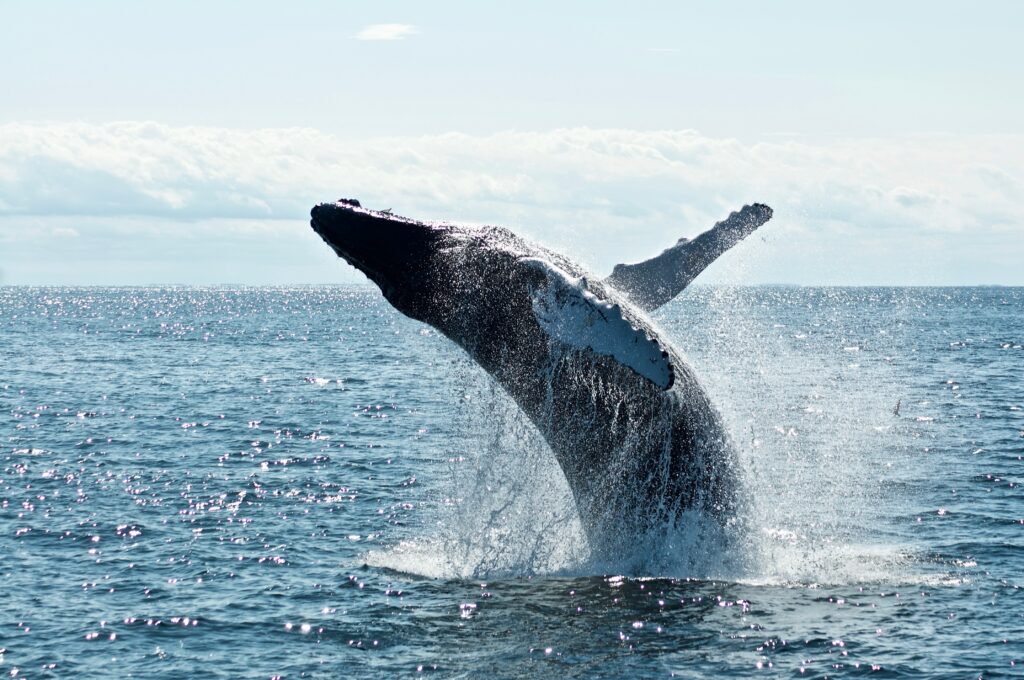
The Gray Whale, scientifically known as Eschrichtius robustus, is a magnificent marine mammal belonging to the Animal Kingdom’s phylum Chordata and class Mammalia. It falls under the Balaenopteridae family, which also includes other baleen whales such as the humpback whale and blue whale. Gray Whales are renowned for their annual migrations and distinctive appearance.
These whales have a robust body, covered in mottled gray skin with patches of white barnacles and whale lice. They possess a characteristic hump and series of knuckles along their dorsal ridge, leading to their nickname “Devil Fish.” The Gray Whale has baleen plates instead of teeth, which they use to filter small crustaceans and plankton from the water while feeding.
Gray Whales undertake one of the longest migrations of any mammal, traveling over 10,000 miles round trip between their feeding grounds in the Arctic and their breeding and calving grounds along the coast of Baja California, Mexico. This journey is essential for their survival and plays a crucial role in maintaining healthy marine ecosystems.
Conservation Concerns
The conservation status of the Gray Whale is relatively stable, and it is not currently assessed separately on the International Union for Conservation of Nature (IUCN) Red List. However, like many marine mammals, Gray Whales face threats from human activities, including habitat degradation, pollution, entanglement in fishing gear, and collisions with ships.
Efforts to protect Gray Whales and their habitats include regulations on whale watching, marine protected areas, and international agreements to mitigate shipping impacts. Monitoring population trends and conducting research on their migration patterns and behaviors are essential for implementing effective conservation measures. While not currently facing significant conservation concerns, continued efforts are necessary to ensure the long-term survival of Gray Whales in their natural environment.