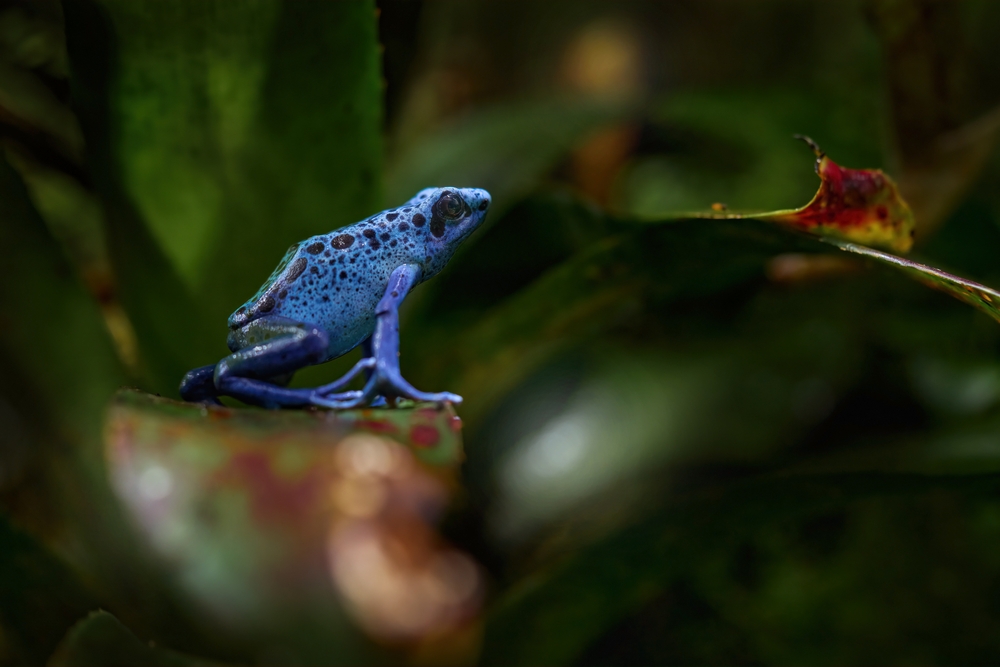
The blue poison dart frog (Dendrobates tinctorius “azureus”) is one of the most visually stunning amphibians on Earth, known for its vibrant electric blue skin covered in black spots. Native to the Sipaliwini savanna forest in southern Suriname and parts of northern Brazil, this tiny frog belongs to the Dendrobatidae family and lives in tropical rainforest microhabitats near streams and humid leaf litter.
Measuring just 3–4.5 cm (1.2–1.8 inches) in length, the blue poison dart frog uses its bold coloration as a warning to predators: its skin contains potent alkaloid toxins that can cause paralysis or even death. In the wild, these toxins are derived from the frog’s natural insect diet, particularly ants and mites. Captive frogs, lacking access to these insects, are typically non-toxic.
Despite its name, the blue poison dart frog is not used by indigenous peoples for poison-tipped darts (unlike some other Dendrobates species), but it is still highly toxic in its native range. It is also territorial and diurnal, using chirps, trills, and posture to ward off rivals and attract mates. Males guard egg clutches laid on land and later transport the hatched tadpoles on their backs to water-filled plant axils or small pools for further development.
In captivity, it’s a favorite among amphibian enthusiasts for its dazzling appearance, bold behavior, and relative ease of care when properly housed.
Though not currently endangered, habitat loss and the pet trade pose ongoing concerns for wild populations.