


A female Greylag Goose usually lays about one egg per day during the egg-laying period. She continues until the clutch is complete, which commonly contains around four to six eggs, although the number can vary. Incubation generally lasts about 27–28 days.


29–36 in (74–91 cm)
Length
58–71 in (147–180 cm)
Wingspan
6–7 in (15–18 cm)
Tail Length
6.6–10.1 lbs (3–4.6 kg)
Weight (Male)
5.5–8.8 lbs (2.5–4 kg)
Weight (Female)
About Greylag Goose
The greylag goose bird (Anser anser) is a large wild waterfowl known for its gray-brown feathers, orange bill, pink legs, and loud calls. It belongs to the Anatidae family, which also includes ducks and swans. Like other birds, Greylag Geese have specialized features that help them survive in their natural environments. Greylag geese are native to much of Europe and parts of Asia, where they inhabit wetlands, lakes, marshes, and open countryside.
Although they spend considerable time near water, these geese often travel onto grasslands and agricultural fields to find food. They graze on fresh vegetation, search for roots and seeds, and gather in flocks when they are not breeding. Some populations migrate seasonally, while others remain in the same general region throughout the year.
Greylag geese are also important in the history of domesticated waterfowl. Many European domestic geese descend from this wild species, although domestic geese can differ considerably in size, color, and behavior. To learn more about the wider bird group, explore our guide to geese.
Greylag geese are adaptable birds that can live in both natural and human-modified landscapes. They often gather in flocks to feed and rest, using their strong social bonds to stay connected with other birds. Depending on the population, they may migrate to warmer regions during winter or remain in the same area year-round when food and suitable habitat are available.
Threatened:
Extinct
Critically Endangered
Endangered
Vulnerable
Near Threatened
Least Concern
Characteristics of Greylag Goose
Greylag geese are among the larger wild geese found across Europe. Adults typically measure around 76–89 cm in length, with a wingspan of approximately 147–180 cm. Their weight varies with sex, population, season, and food availability, but adults commonly weigh around 3–4 kg.
Their plumage is mainly gray and brown, with darker feather markings across the body and paler areas on the forewings. The head and neck are generally similar in tone to the body rather than distinctly darker. The bill is usually orange, although its exact shade can vary, and the legs are pinkish or orange-pink.
These features make the species recognizable at a distance, particularly when a flock is grazing beside a lake or flying overhead. However, plumage can vary between populations, and young birds may look less sharply marked than adults.
Difference Between Male and Female Greylag Goose
Male and female greylag geese look very similar. Both have gray-brown plumage, orange bills, and pinkish legs, so feather color alone is not a reliable way to determine sex. Males are generally larger and heavier, but the difference may be difficult to notice when birds are seen individually in the wild.
| Feature | Male Greylag Goose | Female Greylag Goose |
| Body size | Usually larger and heavier | Usually slightly smaller and lighter |
| Average weight | About 3.5 kg in one UK adult data set | About 3.2 kg in the same data set |
| Feather color | Gray-brown plumage, similar to the female | Gray-brown plumage, similar to the male |
| Bill and legs | Typically orange bill and pinkish legs | Typically orange bill and pinkish legs |
| Breeding role | Often guards the nesting area and helps defend the family | Usually selects the nest site and incubates the eggs |
| Field identification | Size may offer a clue, but is not conclusive | Size may offer a clue, but is not conclusive |
The weights in the table are approximate averages from a UK bird-monitoring data set, not fixed measurements for every population. For reliable identification, researchers may use body measurements, close behavioral observations, or other specialist methods. A photograph alone may not provide enough evidence to distinguish the sexes.
Reproduction of Greylag Goose
Greylag geese generally breed in spring, although the timing varies with location, climate, and local conditions. They often form long-term pair bonds, and established pairs may return to familiar breeding areas in successive years. Before nesting, a pair may spend time feeding together, calling to one another, and defending a suitable area from other geese.
During the breeding season, these normally social birds can become territorial. A male may stand guard while the female prepares the nest or incubates the eggs. If another bird approaches too closely, the pair may hiss, stretch their necks forward, flap their wings, or chase the intruder away.
Nest Building and Egg Laying
The female usually chooses a nesting site close to water, often among reeds, grasses, or other dense vegetation. Greylag geese commonly nest on the ground, where the surrounding plants help conceal the eggs. The nest is made from grasses, reeds, twigs, and other vegetation, with softer plant material and down used to line the inner cup.
A clutch often contains around four to six eggs, although clutch sizes vary and some monitoring sources report five to seven as typical. The eggs are creamy white when first laid and may become darker or stained as incubation progresses. A female generally lays about one egg per day until the clutch is complete; she does not normally lay the entire clutch at once.
The number of eggs that hatch successfully depends on several factors, including weather, disturbance, predation, and the condition of the nesting site. A larger clutch does not necessarily mean that more goslings will survive to adulthood.
Incubation and Parental Care
The female carries out most of the incubation, which typically lasts about 27–28 days. During this period, she stays on the nest for long stretches, leaving briefly to feed and maintain her condition. The male often remains nearby and helps defend the nesting area.
When the eggs hatch, the goslings are covered in soft down and can leave the nest soon afterward. They are precocial, meaning they are relatively well developed at birth and can walk, swim, and begin feeding without being carried by their parents. Even so, they remain vulnerable to predators and harsh weather.
Both parents play an important role in protecting the young. Adults may lead goslings to feeding areas, keep them together, and respond aggressively when a perceived threat approaches. These early family interactions improve the young birds’ chances of surviving their first weeks.
Life Cycle of a Greylag Goose
A Greylag Goose begins life inside an egg, developing for approximately four weeks before hatching. Once out of the shell, a gosling can move around and follow its parents, often entering the water within a short period. Its down provides some insulation, but the young bird still relies on adult protection and suitable shelter.
The parents guide their goslings toward places where food is available and where they can avoid danger. Family groups may feed along the edges of lakes, graze on short grass, or move between water and nearby open ground. During this stage, staying close to the adults is essential because young geese are less capable of defending themselves.
Growth, Flight, and Maturity
As goslings grow, their down is gradually replaced by juvenile feathers. They become stronger swimmers and increasingly independent feeders, but they continue to benefit from the protection of their parents. Greylag goslings generally develop the ability to fly at around 50–60 days of age, although growth rates can vary.
Young birds may remain with their family group for months, sometimes staying together until the next breeding season. They gradually develop adult plumage and learn the feeding, flocking, and warning behaviors that help them survive. Greylag geese commonly reach reproductive maturity at around two to three years of age, though the age at which a bird first breeds can vary.
Lifespan of Greylag Geese
A Greylag Goose’s lifespan depends on its environment, health, food supply, and exposure to predators or other hazards. Many young birds do not survive their first year, so the life expectancy of a bird that reaches adulthood is different from the average lifespan measured from hatching.
UK ringing data suggest that a bird reaching breeding age may have a typical life expectancy of around eight more years, while a recorded ringed individual lived for nearly 20 years. Such records describe known individual birds and should not be treated as the age every goose can expect to reach. Birds in protected settings may live longer than many wild individuals, but lifespan varies considerably.
What Do Greylag Geese Eat?
Greylag geese are primarily herbivorous. Their diet includes grasses, leaves, shoots, roots, sedges, seeds, and other plant material. They also feed on agricultural crops when these are available, including cereal grains and leafy crops. The precise mix changes with the season and the plants growing in their habitat.
Fresh grass and young shoots can be important when plants are actively growing. During colder months, geese may rely more on roots, underground plant parts, leftover grain, and vegetation in wetlands or fields. Their broad diet allows them to use a range of feeding areas rather than depending on one particular plant species.
How They Feed on Land and Water
On land, greylag geese graze much like other large waterfowl, cropping grass and low-growing vegetation with their bills. They may feed in meadows, pastures, parks, and harvested fields, sometimes gathering in large flocks where food is plentiful. Their strong bills help them pull at vegetation and handle a variety of plant foods.
In water, they may dabble or tip their bodies forward, submerging the head and neck while keeping the tail raised above the surface. This lets them reach aquatic plants and other food growing below the waterline. They do not need to dive deeply to find many of the plants they eat.
Seasonal Feeding and Human Landscapes
Food availability changes throughout the year, and greylag geese adjust their feeding accordingly. Wetlands provide aquatic vegetation and roots, while grasslands offer grazing. In agricultural areas, spilled grain and growing crops can become convenient food sources, especially when natural vegetation is limited or seasonal.
This adaptability helps explain why greylag geese can be seen in a variety of landscapes. It can also bring them into conflict with farmers when flocks feed heavily on crops or graze repeatedly in the same fields. The impact depends on flock size, crop type, and local conditions, so it differs from one area to another.
Uniqueness of Greylag Goose
Greylag geese are social birds that often stay in groups while feeding, resting, or moving between wetlands and grasslands. They use loud honking calls to communicate with other geese, especially when flock members are spread out or flying together.
During the breeding season, pairs become more protective of their nests and young. Both parents help keep their goslings safe, and they may hiss, flap their wings, or chase away animals that come too close.
Some interesting points about their behavior include:
- Strong pair bonds: Greylag geese often form long-term relationships with their mates.
- Group living: They gather in flocks to feed, rest, and travel.
- Family care: Parents stay close to their goslings and help them find food and avoid danger.
- Loud calls: Their honking helps them keep in contact with other geese.
Connection to Domestic Geese
The Greylag Goose is the wild ancestor of many domestic geese raised on farms. Over generations, selective breeding has produced domestic birds with different body sizes, feather colors, and appearances. Some domestic geese look quite different from their wild relatives, but they share important features and behaviors.
You can learn more about domesticated geese in our guides to the Domestic White Goose, Pilgrim Goose, and Scania Goose.
Adaptability in Different Environments
Greylag geese can find food and shelter in several types of landscapes. They feed in wetlands, graze on grasslands, and sometimes visit agricultural fields where grain and other crops are available. This flexible diet helps them survive when the availability of particular plants changes with the seasons.
Their ability to use both land and water is another useful adaptation. They can graze in open fields, search for aquatic plants in shallow water, and rest on lakes where they can watch for danger.
Greylag Goose Egg-Retrieval Behavior
One unusual behavior associated with Greylag Geese is their response when an egg rolls away from the nest. A goose may stretch its neck toward the egg and use the underside of its bill to roll it back. It often moves its head and neck in a steady motion until the egg reaches the nest.
Researchers have studied this greylag goose egg-retrieval behavior to understand how animals respond to particular signals in their surroundings. The sight of an egg outside the nest can trigger a sequence of movements that helps bring it back.
A few key points about this behavior are:
- A response to a displaced egg: The goose may begin retrieving an egg when it notices one outside the nest.
- A coordinated movement: It uses its neck and bill to guide the egg back rather than simply picking it up.
- A subject of animal behavior research: Scientists have studied this action as an example of an instinctive behavioral pattern.
- Not always identical: Individual birds may respond differently depending on the situation and their surroundings.
This behavior is a well-known example in the study of animal instincts. It shows how a particular event can trigger a recognizable action, even without the bird needing to learn the entire movement through practice.
How to Identify a Greylag Goose
A greylag goose bird can usually be recognized by its large body, gray-brown plumage, orange bill, and pinkish legs. The feathers often appear mottled, with paler gray areas on the forewings and darker markings across the body. Its head is fairly large, and its neck is held upright when standing or swimming.
Size and bill color are useful clues, but it is best to consider several features together. Other geese may share some of the same colors, and domestic birds can vary widely in appearance. Listening for loud, nasal honking and observing the bird’s behavior can help, especially when a flock is feeding or flying.
Greylag Goose Habitat
The greylag goose habitat includes wetlands, freshwater lakes, marshes, reedbeds, reservoirs, estuaries, and other areas where water and vegetation are available. During the breeding season, geese often choose nesting places with cover near water, while nearby grasslands or meadows provide convenient feeding grounds.
Outside the breeding season, they may use a wider range of landscapes. Flocks can feed in pastures, agricultural fields, and open grassy areas, then return to water to rest or seek safety. Their ability to use both wetland and terrestrial habitats is one reason they can thrive in landscapes shaped by people, provided enough suitable food and safe resting areas remain available.
Wild populations occur mainly across Europe and parts of Asia, and their distribution changes with the season. In North America, wild Greylag Geese are uncommon, although domestic geese descended from the species are familiar sights on farms and in parks.
Greylag Goose Flying and Migration
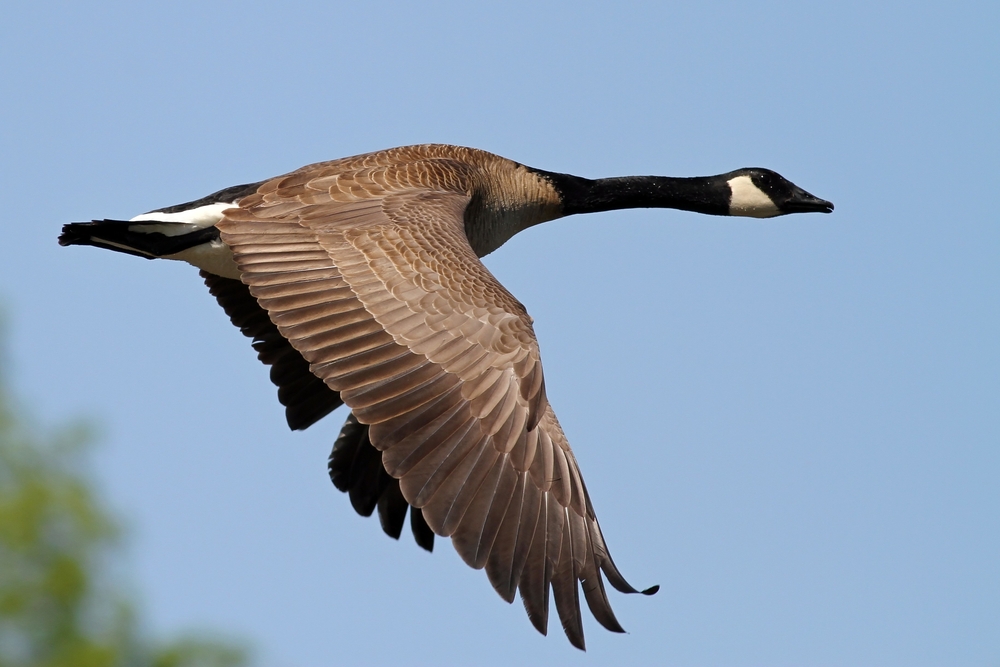
When observing greylag goose flying, look for a long neck held straight and strong, steady wingbeats. Geese often travel in a V-shaped formation or in loose lines, which helps flock members maintain visual contact during group movement. The shape of a flock can change as birds turn, gain altitude, or respond to wind conditions.
Migration patterns vary between populations. Some birds travel long distances between breeding and wintering grounds, while others remain in the same region throughout the year. For example, some Greylag Geese that breed in Iceland move toward Britain and Ireland for winter, while other populations are resident or make shorter seasonal movements.
The timing and distance of migration depend on local weather, food availability, and the location of suitable wetlands. A flock seen flying over farmland may be moving between feeding and resting areas rather than undertaking a long-distance migration.
Greylag goose facts
1. Scientific Name of the Greylag Goose
The scientific name of the Greylag Goose is Anser anser. It belongs to the Anatidae family, which includes ducks, geese, and swans.
2. Greylag Geese Are Large Waterfowl
Adult Greylag Geese usually measure around 76–89 cm in length, with a wingspan of approximately 147–180 cm. Their large bodies, gray-brown feathers, orange bills, and pinkish legs help identify them.
3. They Have a Varied Plant-Based Diet
Greylag Geese mainly eat grasses, leaves, roots, seeds, and aquatic plants. They also feed in agricultural fields, where they may eat leftover grain and growing crops.
4. They Lay Eggs One at a Time
A female Greylag Goose generally lays about one egg per day during the laying period. A typical clutch contains around four to six eggs, although the number can vary.
5. Goslings Can Walk and Swim Soon After Hatching
Greylag Goose eggs usually take about 27–28 days to hatch. The young birds can walk and swim soon afterward, but they rely on their parents for protection and guidance.
6. Greylag Geese Can Fly Long Distances
Greylag Geese have strong wings that help them travel between feeding, resting, and breeding areas. Some populations migrate seasonally, while others remain in the same region throughout the year.
7. They Are the Ancestors of Many Domestic Geese
The Greylag Goose is the wild ancestor of many European domestic goose breeds. Selective breeding over generations has produced domestic geese with different sizes, feather colors, and body shapes.
8. They Communicate Through Loud Calls
Greylag Geese are vocal birds that use loud honking to communicate with other members of their flock. Their calls can help birds stay in contact while feeding, moving, or flying together.
9. Greylag Geese Show Egg-Retrieval Behavior
The greylag goose egg-retrieval behavior is a well-known example in animal behavior studies. When an egg rolls away from its nest, a goose may use its bill and neck to guide it back toward the other eggs.
10. Their Habitats Include Wetlands and Grasslands
The greylag goose bird is commonly associated with lakes, marshes, reedbeds, and other wetlands across Europe and parts of Asia. It also feeds in nearby meadows and agricultural fields, where grasses and other plants are readily available.
Be the First to Share Photos of This Species.
FAQ’s
1. How Many Eggs Can a Greylag Goose Lay a Day?
2. What Is the Closest Species to the Greylag Goose?
The Swan Goose (Anser cygnoides) is considered a close relative of the Greylag Goose in some genetic studies. However, evolutionary relationships among geese in the genus Anser are complex, and studies do not always identify one universally accepted closest species. The Greylag Goose is also closely related to other true or “gray” geese.
3. What Is the Scientific Name for the Greylag Goose?
The scientific name of the Greylag Goose is Anser anser. It belongs to the family Anatidae, which includes geese, ducks, and swans. The repeated Latin name is commonly translated as “goose goose.”
4. Where Do Greylag Geese Live?
Greylag Geese live across much of Europe and parts of Asia. They use lakes, marshes, reedbeds, wetlands, reservoirs, and estuaries, often feeding in nearby meadows, grasslands, and agricultural fields. Some populations migrate seasonally, while others stay in the same general area throughout the year.
5. How Can You Tell Male and Female Greylag Geese Apart?
Male Greylag Geese are generally larger and heavier than females, but their plumage and bill color are very similar. Size may provide a clue when comparing a pair, yet it is not a reliable way to identify every individual. Close observation, body measurements, or specialist methods may be needed to determine sex confidently.


