



What Does a Bear Eat? Diet, Foods, and Feeding Habits
- 14 min read
- By Phillip Imler
- Published:
- Modified:


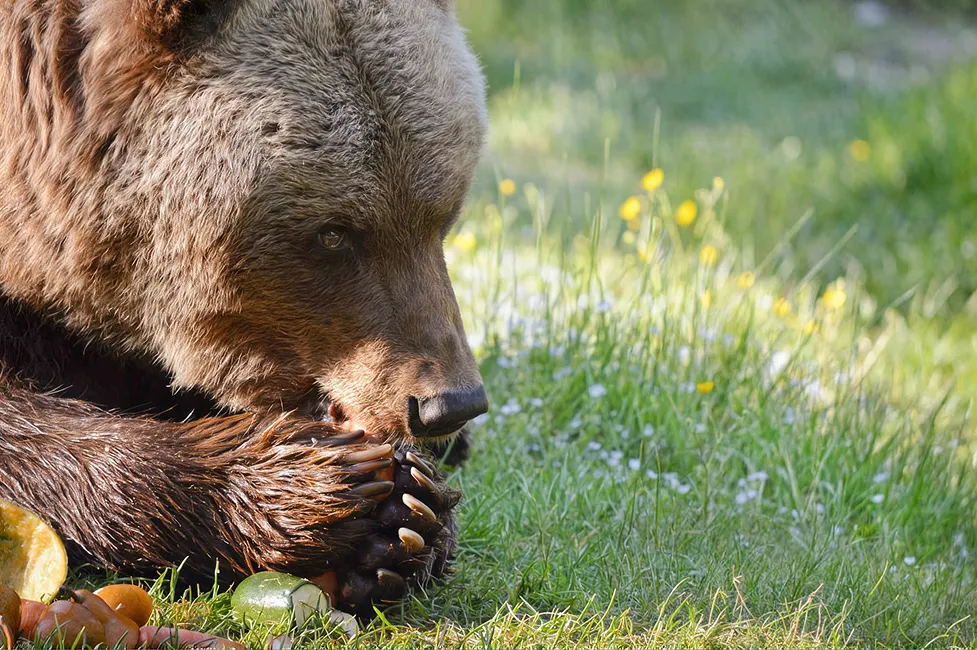
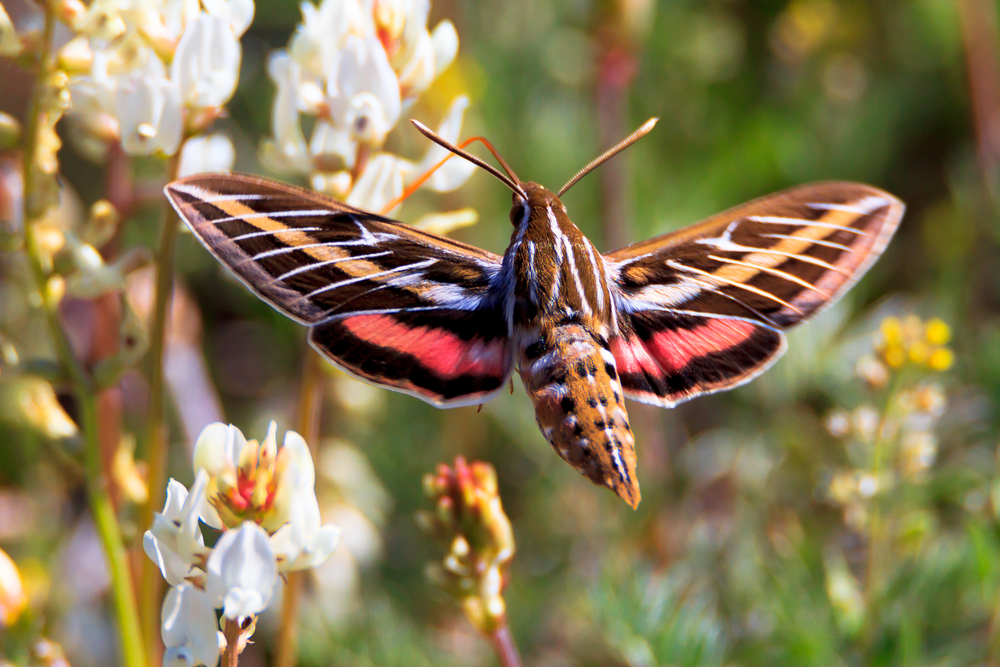
High in Yellowstone’s mountains, grizzly bears sometimes turn over rocks to find army cutworm moths. Thousands of these small insects gather in the rocky slopes during summer, providing a rich source of energy for an animal many people associate with hunting fish or large mammals.
Elsewhere, a black bear might spend much of its day feeding on berries, while a brown bear near an Alaskan river takes advantage of returning salmon.
Most bears eat both plants and animals. They may eat berries, nuts, roots, grasses, insects, fish, and meat. But there isn’t one diet that all bears eat. What an animal eats depends on its species, where it lives, and which foods are available.
A polar bear hunting seals on Arctic sea ice and a giant panda chewing bamboo in a Chinese mountain forest have very little in common at mealtime. Yet they belong to the same bear family.
Understanding these differences begins with an ordinary question: what can a bear find to eat in its own habitat?
Most bears find their food by looking for it, digging for it, climbing for it, or even hunting it.
Bears are opportunistic feeders at best. So they can take advantage of the right food they find, instead of eating the same meal everyday.
A bear may spend hours foraging for berries in summer and then turn to nuts in the fall. Another may search under decaying logs for insects, or feed on the carcass of a dead animal.
Common bear foods include:
The list is broad because bears inhabit very different environments.
Some foods are available for only a few weeks out of the year. Others can be reached for months. Bears change their feeding behavior as these opportunities wax and wane.
This flexibility is most clearly seen in the case of the American black bear.
Black bears can climb trees and they have strong jaws and claws. These features may represent an animal that spent much of its life hunting.
But in many places, black bears obtain most of their food from plants.
In Great Smoky Mountains National Park, the National Park Service estimates that roughly 85% of a black bear’s diet consists of plant material.
Berries, nuts, and acorns are particularly valuable.
A bear may feed on berry patches in summer. In the fall, acorns and other nuts can be a rich source of energy to get through the winter.
These foods require different kinds of work. Berries should be harvested in abundance, nuts can be strewn on the forest floor or collected under productive trees.
Black bear feeding patterns change as resources become available.
They also eat insects, eggs, small mammals and carrion. But the proportion of animal food in their diet varies from region to region.
A black bear living in the Great Smoky Mountains does not necessarily eat in the same proportions as one living in the Pacific Northwest.
The National Park Service’s black bear guide explains how seasonal food supplies influence these animals.
Their ability to switch foods helps black bears live in forests with very different growing seasons and resources.
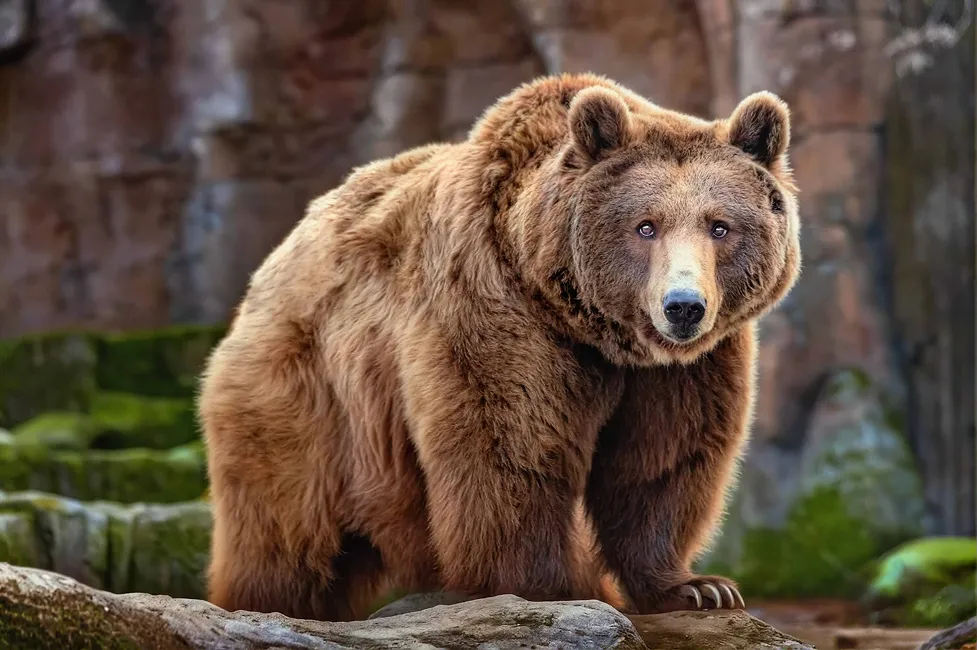
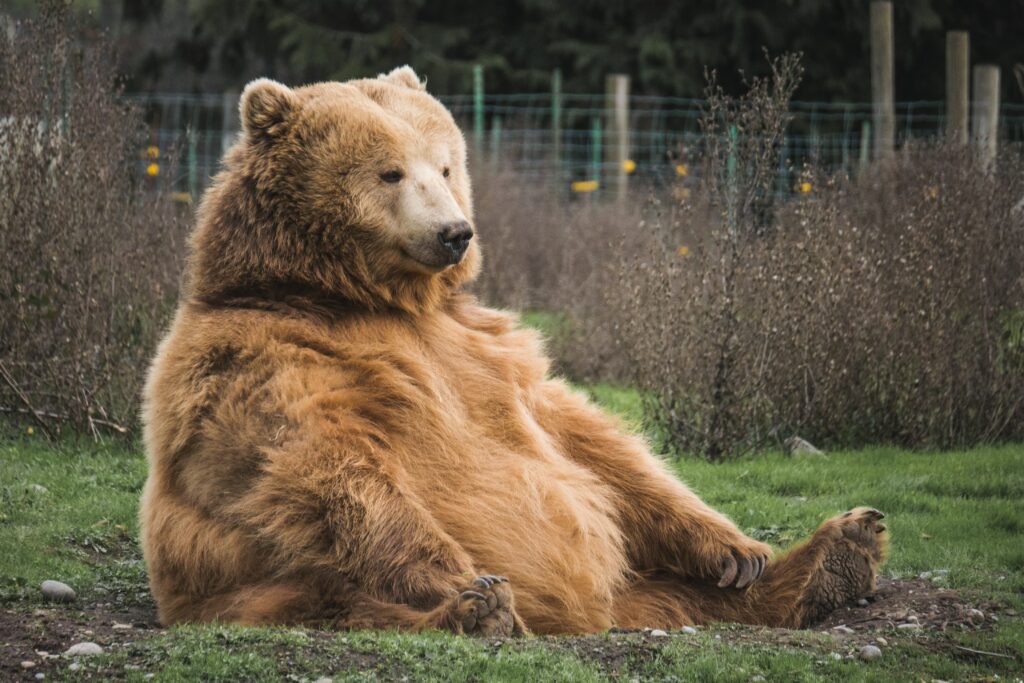
Brown bears are widespread across parts of North America, Europe, and Asia. Their geographic range helps explain why their diets are so varied.
An inland brown bear may feed on roots, berries, grasses, insects, and mammals. Along some Alaskan coasts, salmon can provide a large share of the energy available during the fishing season.
These differences aren’t just matters of preference.
The surrounding landscape determines what food a bear can reach.
During salmon runs, rivers in parts of Alaska become important feeding grounds for brown bears.
Salmon returning from the ocean are a concentrated source of protein and fat. Bears that catch them can get a lot of energy without having to travel far between meals.
At places such as Katmai National Park, several brown bears may feed near one another when salmon are abundant.
This is unusual for animals that generally spend much of their lives alone.
Bears with access to rich coastal food supplies can become considerably larger than many inland brown bears.
Some experienced bears also feed selectively when fish are plentiful, consuming energy-rich parts rather than eating every fish completely.
Scientists studying brown bears in Alaska’s Brooks Range wanted to learn how much their diets differed.
Instead of relying only on observations, researchers examined chemical signatures in the bears’ hair.
Hair retains information about nutrients absorbed from food. By studying stable carbon and nitrogen isotopes, scientists can estimate the contribution of different food sources.
The research involved samples from 80 brown bears.
During the late-summer and early-autumn period examined, the researchers estimated that animal-derived foods contributed approximately 62% of the assimilated diet of males and 40% for females.
The difference showed that bears living within the same broad region did not necessarily feed alike.
Those figures describe the studied animals and season. They aren’t universal percentages for brown bears.
The National Park Service’s Brooks Range bear-diet research provides more details about the study.
One of the less familiar bear foods is also among the more interesting.
In Yellowstone’s high mountains, army cutworm moths gather among loose rocks during summer.
Grizzly bears travel to these sites and turn over stones to reach the insects.
One moth provides only a small meal. But when moths gather in large numbers, the feeding opportunity becomes worthwhile.
The insects contain substantial fat, making them a valuable source of energy.
The National Park Service has documented this behavior in the Greater Yellowstone Ecosystem, where moths are among several concentrated, high-energy foods available to grizzlies.
A bear feeding on moths is very different from one catching salmon, but both are taking advantage of a temporary seasonal resource.
This is one reason the question of what bears eat cannot be answered with a single food list.
A bear’s feeding opportunities may change dramatically over a relatively short distance.
Not every bear depends on a wide assortment of foods.
Several species in the bear family have developed physical adaptations that help them feed on particular resources.
A polar bear traveling over the Arctic sea ice has little chance to collect fruit or nuts.
Seals are its main food, especially ringed seals and, to a lesser extent, bearded seals.
Polar bears will often wait by breathing holes or look for seals resting on ice.
The fat under a seal’s skin is especially prized. It provides a kind of concentrated energy for an animal that lives in freezing conditions.
According to the U.S. Fish & Wildlife Service, polar bears rely heavily on these seal species.
They occasionally eat birds, carcasses, and other available foods, but those resources generally cannot replace the energy obtained from seal fat.
The giant panda belongs to the order Carnivora, just like other bears.
Yet bamboo dominates its diet.
Pandas have strong jaw muscles and specialized teeth for chewing bamboo stalks, shoots and leaves.
A modified wrist bone also helps them grasp the stalks while feeding.
Bamboo is not especially rich in readily available energy, so pandas must eat substantial quantities and spend much of their time feeding.
Their diet is a good reminder that animals classified within the same biological order can develop very different feeding strategies.
Sloth bears are strongly associated with insect feeding.
Their long snouts, mobile lips, and specialized front teeth help them draw insects from nests.
A sloth bear can break open a termite mound, clear away loose material, and suck up the insects inside.
Insects are just part of the picture.
A 2026 study in Biotropica looked at sloth bear feeding in the Aravalli Mountains of western India.
The researchers found a seasonal change: fruit made up a larger share of the winter diet, while insects were more prominent during summer.
This is useful evidence that even a specialized insect-feeding bear can change its diet when seasonal resources shift.
Read the 2026 study of seasonal sloth bear diets.
Sun bears live in Southeast Asian forests and often search for food in trees and decaying wood.
Curved claws are used to climb and tear into decaying logs.
They can reach insects, larvae and honey in places where many other animals would have a hard time getting to thanks to their long tongues.
Fruit is also an important part of their diet.
When fruiting trees produce a lot of food, sun bears can take advantage of the resources. In other times insects may become more relevant.
Their feeding habits reflect the changing conditions of a tropical forest.
Yes. Bears are hunters but how often they hunt depends on the species of bear and the prey available.
Brown bears may catch fish, hunt young hoofed mammals, or feed on carcasses. Some also dig for small mammals and raid nests.
American black bears eat animal foods as well, although plants dominate the diet in many populations.
The most obvious example of specialized hunting in the bear family is the polar bear. Their bodies and behavior are adapted for catching seals.
But just because an animal is powerful enough to hunt doesn’t always mean it benefits.
Chasing prey takes energy. A productive berry patch, salmon stream or insect colony might give food with less effort.
Bears exploit these opportunities.
In Yellowstone, grizzlies might eat elk and bison carcasses in spring, hunt for roots and insects in warmer months and eat other concentrated foods later in the year.
Their choice of food changes with the conditions of their environment.
When a bear is looking for food, its sense of smell is especially important.
It can help an animal find a carcass, an unfamiliar source of food or to check out the surrounding landscape.”
But the smell is only part of the process.
Bears also depend on learning and memory.
If a bear finds food in an area, it may return to that area when the resource is available again. Bears might return repeatedly to salmon streams, fertile berry patches and groves of nut trees.
Their bodies have the tools they need to get to the food.
Claws are used to dig into soil or rotting wood. Strong jaws grind up plant and animal matter. Some bears climb trees, others spend long times foraging on the ground.
These behaviors help explain why protecting feeding habitat matters.
A bear needs more than somewhere to rest. It needs access to resources that may be spread across a large area and available at different times of year.
For bears in temperate and northern regions, the passing seasons change the menu.
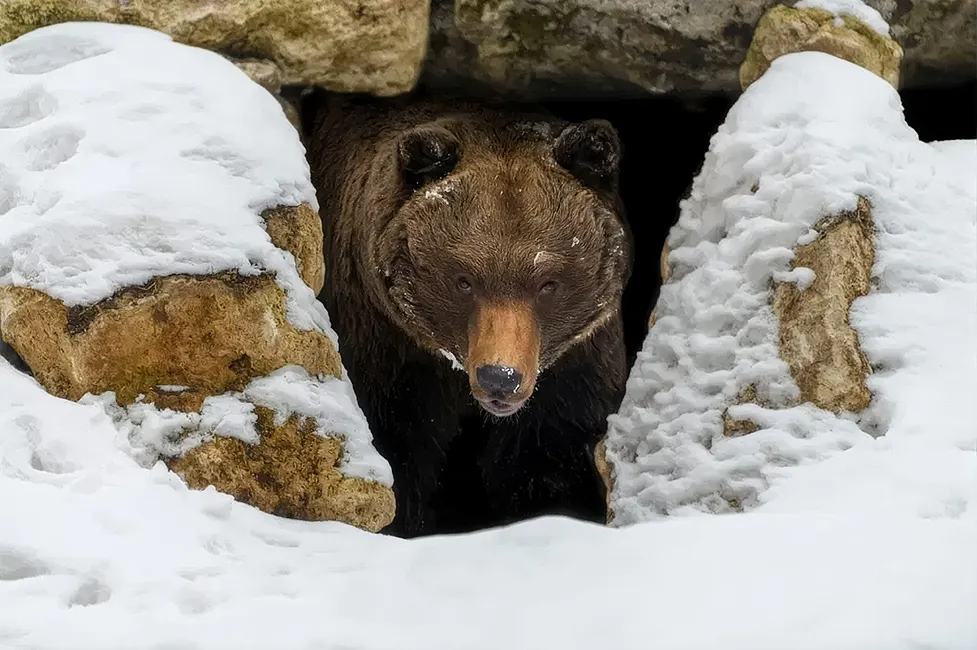
Spring can be a difficult period. Some bears emerge from winter dens before many plants have fully grown.
They could eat new plants or the roots. They could eat bugs or the bodies of animals that died over the winter.
In Yellowstone, grizzly bears use elk and bison carcasses as important food sources during early spring.
Summer brings a broader range of resources.
Berries start to ripen, insects become more available and certain fish runs provide food in suitable habitats.
Bears may move between feeding sites as resources become available.
Autumn is especially important for bears getting ready to spend the winter in dens.
They build up fat reserves by eating energy-rich foods like acorns, nuts and berries.
During a period called hyperphagia, many bears greatly increase how much they eat.
The National Park Service documents substantial autumn weight gain among grizzly bears in Yellowstone.
Our separate article about bear hibernation explains how stored energy supports bears through the winter. This connection between feeding and dormancy is important, but the detailed biology of hibernation belongs in that dedicated guide.
Not every bear follows this seasonal pattern. Tropical bears and most polar bears have different feeding conditions.
Watching a bear feeding can reveal a great deal, but an observation only tells researchers what happened at that moment.
To understand a diet across months or seasons, scientists use other methods.
One of the common ways is to look at bear poo.
Seeds, insect remains, hair and other matter may provide clues to recent meals.
But scat doesn’t always reveal how much nutritional energy a bear absorbed. Some foods leave more recognizable remains than others.
Stable isotope analysis offers a different kind of evidence.
Chemical signatures in hair or other tissues allow researchers to estimate the relative contribution of plant and animal foods over time.
Scientists can also look at feeding signs, examine carcasses, use tracking data, or compare food availability to bear movements.
Each method is answering a slightly different question.
A bear seen eating berries may have also eaten insects or meat earlier that same day. Even if another food provided more energy, a scat sample can contain abundant seeds.
Good research does not take one observation as the whole account of an animal’s diet, but does take these limitations into account.
When bears eat berries and other fruits, they may also eat the seeds with the pulp.
Some seeds pass through the digestive track and are deposited elsewhere.
This can help to disperse seeds from the parent plant.
In 2021, a study published in Scientific Reports reviewed data on brown bear fruit consumption from 96 study areas.
The researchers recorded at least 101 species of fleshy-fruited plants that brown bears eat.
They also looked at the effect of passage of seeds through the digestive system on germination for selected plant species.
Not all plants reacted in the same way. Some seeds did very well in some conditions and others didn’t.
The research helps explain how bears can affect vegetation through normal feeding behavior.
Read the study on brown bears and seed dispersal.
The relationship works in both directions. Fruit provides food for bears, while bears may help move viable seeds across the landscape.
A bear looking for food may investigate an unattended picnic, an open garbage container, or pet food left outside.
When bears repeatedly find food near people, they may begin returning to those places.
This creates a serious management problem.
Bears that have learned to associate people with food may become persistent in the vicinity of campsites, neighborhoods and roadways. Some may lose their innate shyness.
That increases the potential for dangerous encounters.
In certain situations, wildlife managers must remove these animals to protect public safety.
The National Park Service advises visitors to store food and garbage properly and never feed wild bears.
See its bear food-storage guidance.
The safest way to watch a bear feeding is from an appropriate distance, without approaching it or changing its behavior.
Yes. Many bears eat meat, but the amount varies widely. Brown bears may hunt or scavenge mammals, while polar bears rely heavily on seals. Giant pandas, by contrast, eat almost entirely bamboo.
In many populations, plant foods make up most of the diet. Black bears commonly eat berries, nuts, grasses, roots, and other vegetation, along with insects and occasional animal foods.
Some do. Sun bears and sloth bears may feed on honey and bee larvae. Honey is not an equally important part of every bear species’ diet.
No. Fish is important for certain bears when it is available, especially coastal brown bears during salmon runs. Many inland bears rarely encounter fish.
There is no single favorite food shared by all bears. Feeding choices depend on species, location, season, and the energy offered by available resources.