







Why Do Bears Hibernate? Reasons and Winter Survival
- 13 min read
- By Phillip Imler
- Published:
- Modified:


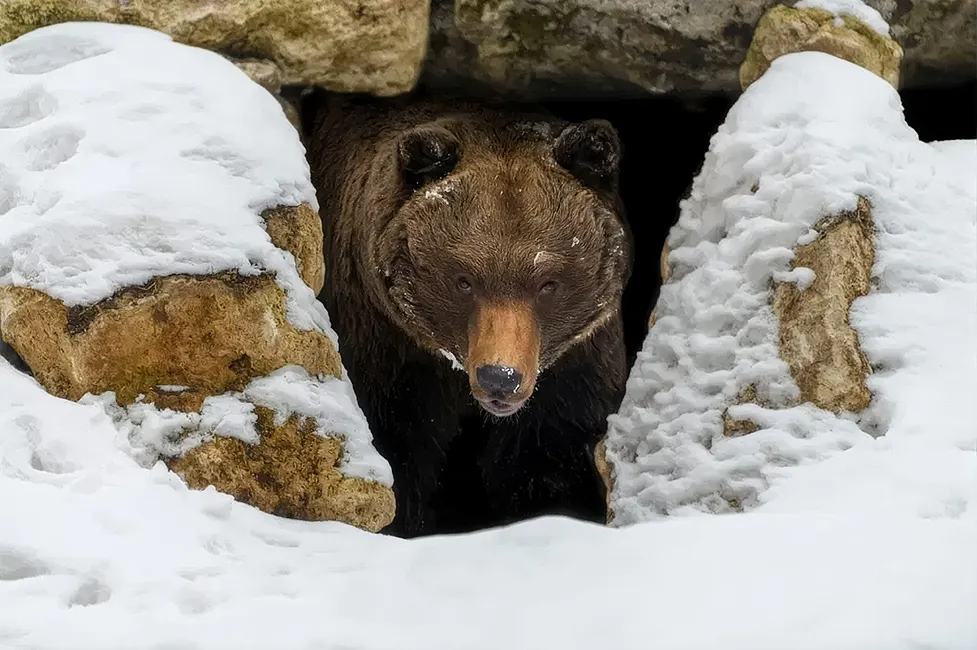
Winter can be difficult for a bear. The berries that were plentiful in summer are gone, insects are harder to find, and snow may cover much of the ground. For a large animal that needs a steady supply of food, searching through the cold months can cost more energy than it provides.
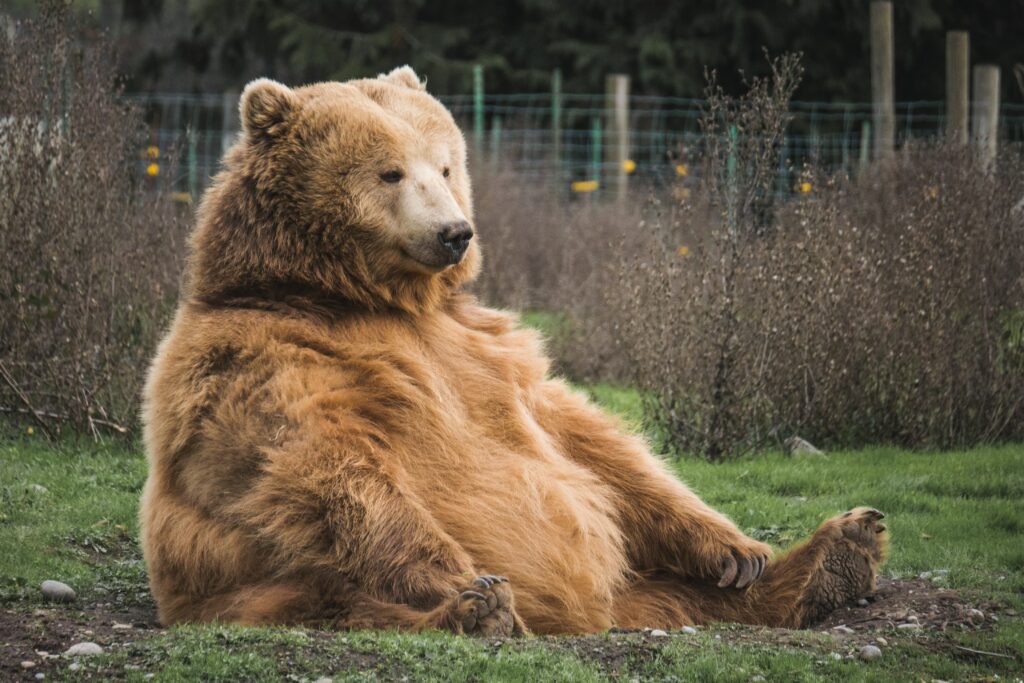
Bears hibernate to conserve energy when food becomes scarce. Instead of continuing to forage through winter, they survive on fat stored during the warmer months. Their heartbeat slows, their bodies use less energy, and they can remain in a den for months without normal feeding.
But a bear resting through winter isn’t simply sleeping. Its body is doing something that scientists have spent decades trying to understand. It can go without food and water for an extended period, preserve much of its muscle strength, and, in the case of a pregnant female, even give birth.
What makes all this possible begins long before the first snowfall.
Cold weather matters, but it isn’t the whole explanation.
A bear living in a northern forest faces a problem every autumn. Much of its regular food becomes less available just as moving through the landscape becomes more demanding.
Staying active means using energy. Finding enough food to replace that energy becomes increasingly difficult.
Winter dormancy provides a way around this problem. By greatly reducing its metabolic activity, a bear can get through the season using energy it has already stored.
That connection between food and hibernation explains why bears don’t all hibernate on the same winter clock.
Suppose two populations of American black bears. Long winters and limited food in Alaska encourage extended denning. Winter is milder in Florida, and some bears keep moving and feeding at times when bears up north would be holed up.
Both are American black bears, yet their winter behavior can be quite different. Our guide to bears explains how their habitats and behavior vary across the bear family.
A bear doesn’t enter its den with an empty stomach and hope for the best.
For bears that hibernate, the months before winter are a time of heavy feeding. As autumn approaches, some spend a remarkable amount of time looking for food.
Scientists call this period hyperphagia.
During hyperphagia, a bear eats far more than it would during periods of ordinary activity. It may take advantage of berries, nuts, insects, fish, or other foods available in its habitat.
The extra calories are stored largely as body fat.
That fat will become the bear’s main energy source during winter. It also provides insulation and supports vital functions when the animal isn’t eating.
In Yellowstone National Park, grizzly bears may consume large quantities of food during late summer and autumn. Their preparation is so important that a poor feeding season can affect their condition going into winter.
The exact foods differ between regions. Bears feeding near salmon streams in Alaska have opportunities that inland bears living among forests and mountains may not.
What matters most is the energy stored before denning begins.
A bear that enters winter in good condition has reserves available during the months when it cannot rely on normal feeding.
A bear den isn’t always the cave-like shelter people imagine.
Black bears may use hollow trees, sheltered spaces beneath fallen logs, or cavities among rocks. Brown bears often excavate dens in hillsides, although they can also use natural shelters.
Location matters.
The den should be protected from bad weather and unnecessary disturbance. In cold areas, snow that builds up can provide some insulation.
In Yellowstone, grizzly bears sometimes dig dens on steep slopes at higher elevations. The entrances may eventually become covered by snow, leaving the bears sheltered for the season.
The animal doesn’t necessarily need a spacious chamber. Many dens are compact, with just enough room for the bear to settle into a resting position.
Once inside, the bear’s activity falls dramatically.
Its breathing slows. Its heartbeat becomes less frequent. The body begins operating on a much smaller energy budget.
The den provides shelter, but the bear’s physiology makes prolonged winter survival possible.
The most interesting part of bear hibernation is hidden beneath the fur.
An active bear needs energy for walking, feeding, maintaining body temperature, and carrying out ordinary bodily functions. During hibernation, many of those energy demands are reduced.
Researchers have measured just how dramatic the change can be.
In 2011, Øivind Tøien and colleagues published a study in Science examining the physiology of hibernating American black bears.
They found that the bears could reduce their metabolic rate to approximately 25% of their basal metabolic rate.
Their body temperatures fluctuated between about 30°C and 36°C, while heart rates fell from around 55 beats per minute to as few as nine.
The findings revealed something unusual.
Many small hibernating mammals lower their body temperatures considerably. Bears achieve a large reduction in metabolism while remaining relatively warm.
Their bodies are conserving energy through more than simple cooling.
You can read the original 2011 black bear hibernation study.
Think about the energy a bear normally spends moving through a forest.
During winter, most of that activity stops.
But its heart must still beat. It has to keep its brain and other organs working. The animal needs to have enough energy to live and to react to its surroundings.
Slowing down the metabolism makes stored fat last a lot longer.
The bear isn’t shutting down its body. It sustains life-sustaining functions and reduces energy requirements wherever possible.
That is why hibernation is not like normal sleep.
Yes.
Bears can respond to disturbances while hibernating. Their body temperature remains high enough that they don’t require the prolonged warming period associated with many small mammals in deep torpor.
A disturbed bear may become alert and potentially leave its den.
That doesn’t make winter dens safe places to approach. A bear inside a den is still a powerful wild animal, and disturbing it can put both the animal and people at risk.
This is another problem for a bear that stays in its den for months on end.
How can it live without drinking water, or without regularly getting rid of waste?
Humans would be in danger quickly if they stayed inactive for a long time without food and water.
Hibernating bears have physiological adaptations to deal with these conditions.
They get energy from the breakdown of stored fat. This process also produces metabolic water, which helps to maintain hydration.
At the same time, their bodies greatly reduce water loss.
Waste handling is particularly unusual.
In normal mammalian metabolism, breaking down proteins produces nitrogen-containing waste. Hibernating bears can recycle much of this nitrogen rather than losing it through ordinary urine production.
Research on American black bears has also shown that the bladder can reabsorb water and certain dissolved substances.
These adaptations allow the animals to do without the normal processes of drinking and urinating for long periods.
A study titled The Urothelium of a Hibernator: The American Black Bear examines this unusual process.
Beyond wildlife biology, the finding raises questions of how mammals manage water balance and nitrogenous waste under extreme conditions.
But for the bear, the immediate goal is simple: make it through the winter, with what’s already in the body.
Think about a few months of very little physical activity.
For someone who would typically cause significant muscle weakness and alterations in bone strength.
Inactive for long stretches, a hibernating bear preserves most of its muscle mass and function.
This has attracted a lot of interest from researchers.
In January 2025, researchers published a study in Nature Communications analysing muscle fibres from brown bears in summer when they’re active and in winter when they’re hibernating.
They saw changes in how the muscle proteins used energy.
A key discovery was reduced ATP utilisation by myosin, a protein that causes muscles to contract.
ATP is used to power many functions in the cell, including moving muscles. Minimising inefficient use of ATP to save energy under long dormancy.
The study identified a mechanism that may contribute to the remarkable energy efficiency of hibernating bear muscles.
Bones usually respond to regular physical activity. When movement stops for a prolonged period, bone tissue can weaken.
Bears show a different response.
In 2021, a study in Scientific Reports looked at gene-expression changes linked to bone preservation in hibernating black bears.
The results suggest that changes in the regulation of bone breakdown help preserve bone structure during winter inactivity.
Scientists are interested in whether understanding these mechanisms could eventually inform research into human muscle and bone loss.
That possibility remains an area of research, not an established medical treatment.
For a bear emerging from its den, preserving strength has an immediate benefit. It needs to move through its habitat and begin finding food again.
There isn’t one date when bears across North America enter their dens.
Some start to settle down in the fall. Some others are active into the later part of the year, depending on local conditions.
Availability of food is a major influence, but temperature, snowfall, age, sex and reproductive status matter too.
Yellowstone’s grizzly bears provide a useful example.
The National Park Service reports average denning periods of approximately 131 days for males, 151 days for females without newborn cubs, and 171 days for females with cubs.
These are averages for the Greater Yellowstone Ecosystem, not fixed periods that apply to every grizzly bear.
A bear living farther north may remain sheltered longer. Another in a milder region may spend much less time in a den.
Pregnant females often follow different schedules because they need to give birth and care for their cubs.
Depending on location and species, winter denning may last a few months or more than half the year.
In colder areas, American black bears may stay in dens for about five to seven months.
In warmer areas this period can be much shorter.
Bears may wake up for short periods, move around in their dens or be active during warm weather.
The length of the hibernation is therefore best considered as a reaction to the environmental situation in the area, and not as a rigid biological calendar.
No. The eight living bear species do not share the same winter behavior.
American black bears and brown bears are the species most commonly associated with extended winter denning in North America.
Asiatic black bears also hibernate in colder parts of their range.
Other bears live under different seasonal conditions.
Sun bears live in the tropical forests of South-east Asia and they don’t typically hibernate for long periods during the winter.
Sloth bears also tend to stay active rather than going into long hibernation.
Giant pandas don’t hibernate normally. Instead, they can move between elevations as seasonal conditions and food availability change.
Polar bears are really interesting animals.
Most polar bears hunt in the Arctic winter, when sea ice lets them reach their main prey, seals.
Pregnant females are an important exception to this. They enter maternity dens where they will give birth and tend their cubs.
The divergence between species reflects how closely winter behaviour is linked to food availability and reproductive needs.
For some female bears, the winter den serves another purpose.
It becomes the place where their cubs are born.
Female black bears and brown bears commonly give birth during winter denning.
This is possible partly because of a reproductive adaptation called delayed implantation.
After mating, the fertilised embryo exists in an early stage of development until it implants in the uterus later in the year.
The timing helps coordinate pregnancy with seasonal conditions and the mother’s physical condition.
When cubs are born, they are extremely small.
The Florida Fish and Wildlife Conservation Commission reports that newborn black bear cubs typically weigh only about 225–450 grams.
Their eyes are closed, and they depend entirely on their mother.
While the female remains in the den, she produces milk and cares for her young using energy stored before winter.
By the time spring arrives, the cubs have grown considerably.
For these mothers, winter dormancy involves far more than conserving their own energy. They are also supporting the next generation.
As winter yields to spring, new feeding opportunities present themselves.
The snow begins to melt. New plant growth emerges and food sources for animals become more available.
It gets better and the bears come out of their caves.
Males often emerge earlier than females caring for newborn cubs.
A bear may have lost a considerable amount of body weight during winter, much of it from the fat reserves accumulated in autumn.
Its first priority is finding food.
In some northern habitats, bears feed on early vegetation or the remains of animals that died during winter.
The National Park Service explains that Yellowstone bears may seek winter-killed animals and early spring plant growth after emerging from their dens.
Activity gradually increases as the animals return to their normal seasonal routines.
The months of feeding, movement, and fat accumulation begin again.
Researchers found temperature and human food sources can affect how long some bears stay in their dens.
A study in the Journal of Applied Ecology used data collected between 2011 and 2016 to investigate black bear denning near Durango, Colorado.
The researchers found that warmer winters were linked to shorter hibernation periods.
In the studied population, an increase of 1°C in minimum winter temperature was associated with about six days of hibernation less.
Denning patterns were also influenced by availability of food and human development.
That doesn’t mean every bear will respond to a warmer winter the same way, he said.
The outcome is conditional on local food sources, geography, reproductive status, and other conditions.
But the study does show that winter behaviour is linked to changes in the local environment.
Active bears near towns can also find unsecured garbage, pet food and other human food sources.
Preventing access to these attractants can help reduce conflict and discourage bears from becoming dependent on human-supplied food.
Read the research on climate, human development, and black bear hibernation.
Bears spend much of their winter denning period in a low-energy state, but they are not continuously unconscious. They can respond to disturbances and may occasionally become active.
Bears undergoing prolonged hibernation generally survive on stored body fat without eating. However, bears that remain active during winter may continue feeding.
Their bodies conserve water and they produce metabolic water as they metabolise stored fat. Other adaptations reduce water loss during prolonged dormancy.
Yes. A hibernating bear may wake when disturbed, and some bears leave their dens temporarily. Winter denning behavior varies with the animal and local conditions.
In warmer climates food may be available for longer parts of the year. If bears are able to meet their energy needs without long periods of dormancy, perhaps extended hibernation is unnecessary.